

How To: Winterizing Your Trailer
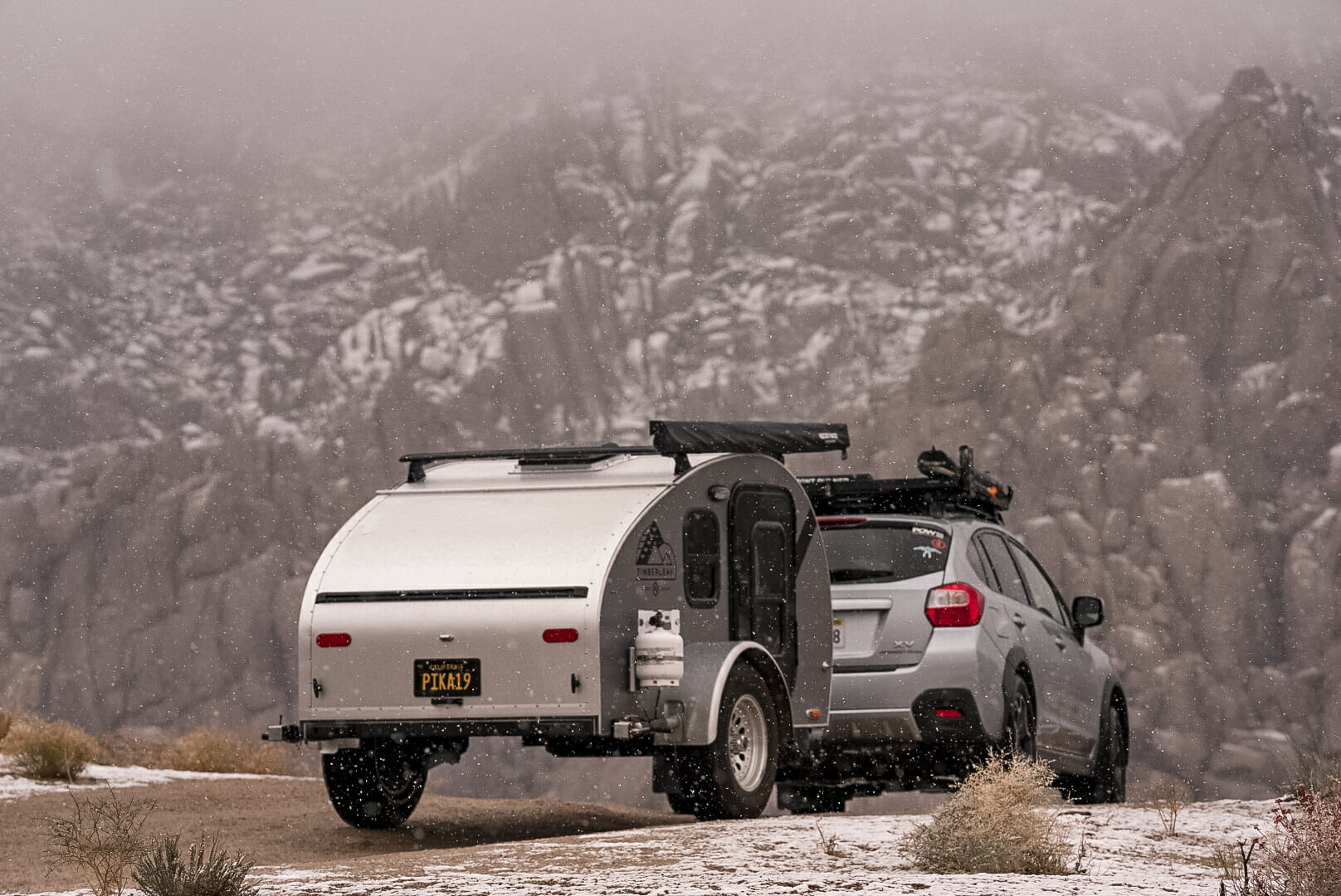
Image: Mike O’Hara Photography | Instagram @mikeoharaphoto
As the seasons shift and temperatures drop, it’s worth taking a little time to winterize your Timberleaf trailer—protecting it from freezing temps and long-term storage wear. Luckily, teardrops are some of the lowest-maintenance campers around.
This guide covers the basics:
- Prepping your plumbing system
- Caring for AGM & lithium batteries
- Interior cleaning and mildew prevention
- Exterior protection and storage tips
Preparing the Plumbing System
If any water is left in your plumbing system when freezing temperatures hit, even a small amount can cause cracks, leaks, or pump failure. A few minutes of prep now will save you time (and money) come spring.
You’ll need:
- Non-toxic RV antifreeze
- A funnel with flexible neck
Look for propylene glycol-based antifreeze—non-toxic, safe for your lines, and easy to flush in spring. Avoid anything with ethanol.
Step One
Drain the water tank by switching the green pump switch to ON and opening the faucet. Let it empty fully.
Step Two
Use your funnel to pour 2–3 gallons of antifreeze into the water tank via the fill port.
Step Three
Turn the pump back on and open the faucet until pink antifreeze flows through. Then, turn the pump OFF and close the faucet.
That’s it. Your plumbing is now protected from freeze damage.
Come spring, flush thoroughly with clean water until no pink remains. A food-grade water system rinse is helpful for your first trip of the season.
Battery Care
Whether you have a standard AGM battery or the upgraded lithium option, a little care over winter goes a long way. The goal: preserve charge capacity, prevent damage, and ensure everything’s ready when warmer weather returns.
If you’re storing the trailer more than two weeks without solar or shore power, disconnect the battery to prevent small but steady parasitic draws from onboard systems.
For trailers built before 2022, use the 50A circuit breaker located under the sink—press the colored button (red, blue, or yellow) until the side lever drops and power is cut off.
For trailers built in 2022 or later, you’ll find a dedicated battery disconnect switch on the main control panel—flip it to shut off all power to onboard systems.
Method One (AGM only)
Plug your trailer into a household outlet. The onboard charger will manage charge cycles safely between 32–104°F. Do not use this method with lithium batteries.
Method Two (Recommended)
Remove the battery and store it indoors in a temperature-controlled space (ideally 40–80°F). Connect it to a smart trickle charger. When spring returns, your battery will be topped up and ready.
Tip: Don’t store batteries directly on concrete. Place foam or plywood underneath.
Method Three: Lithium Care
Lithium batteries won’t charge below 32°F. Even if the air is warmer, the battery itself may stay too cold. Unlike AGM, lithium doesn’t need a constant charge—but storing it indoors will extend its life. Fully charge the battery before your next trip and you’re good to go.
Interior Cleaning & Mildew Prevention
Before sealing things up for the season, a bit of cleaning and moisture control will keep your cabin fresh and ready for the road.
Cleaning
Use a wood-safe cleaner like Murphy’s Oil Soap and a microfiber cloth to gently clean the Baltic Birch interior. Avoid using any cleaner on the skylight.
Dehumidifying
Place a moisture absorber in the cabin and galley to help prevent mildew and odors. Compact dehumidifiers or disposable tubs work well in closed spaces.
Mattress Cover
Use a waterproof, breathable mattress protector to guard against dust and moisture—ideal for both storage and travel use.
Exterior Coverage & Protection
Cleaning
Before storage, give the exterior a thorough rinse. Remove any dirt, bugs, or road grime—especially around latches, seals, and hardware. A gentle automotive soap and soft-bristle brush or microfiber mitt are all you need.
Ceramic Coating (Optional)
Ceramic coatings provide added protection and make washing easier in the long run. Application takes prep and care but can help preserve your trailer’s finish over time.
Covering Your Trailer
Timberleaf trailers are built for the elements—but storing them under cover whenever possible helps protect against UV damage, snow, and ice.
Until our custom-fit covers are available, you can use:
- PolyPRO3 10’ Cover – Good fit for the Classic
- PolyPRO3 8’ Cover – Works well for the Pika and Kestrel
- Portable garages or canopies – Ideal for long-term outdoor storage
- Pergola structures with heavy-duty tarps – Stylish and functional protection for home storage
Important: Never store your trailer in direct sunlight with the skylight shade closed.
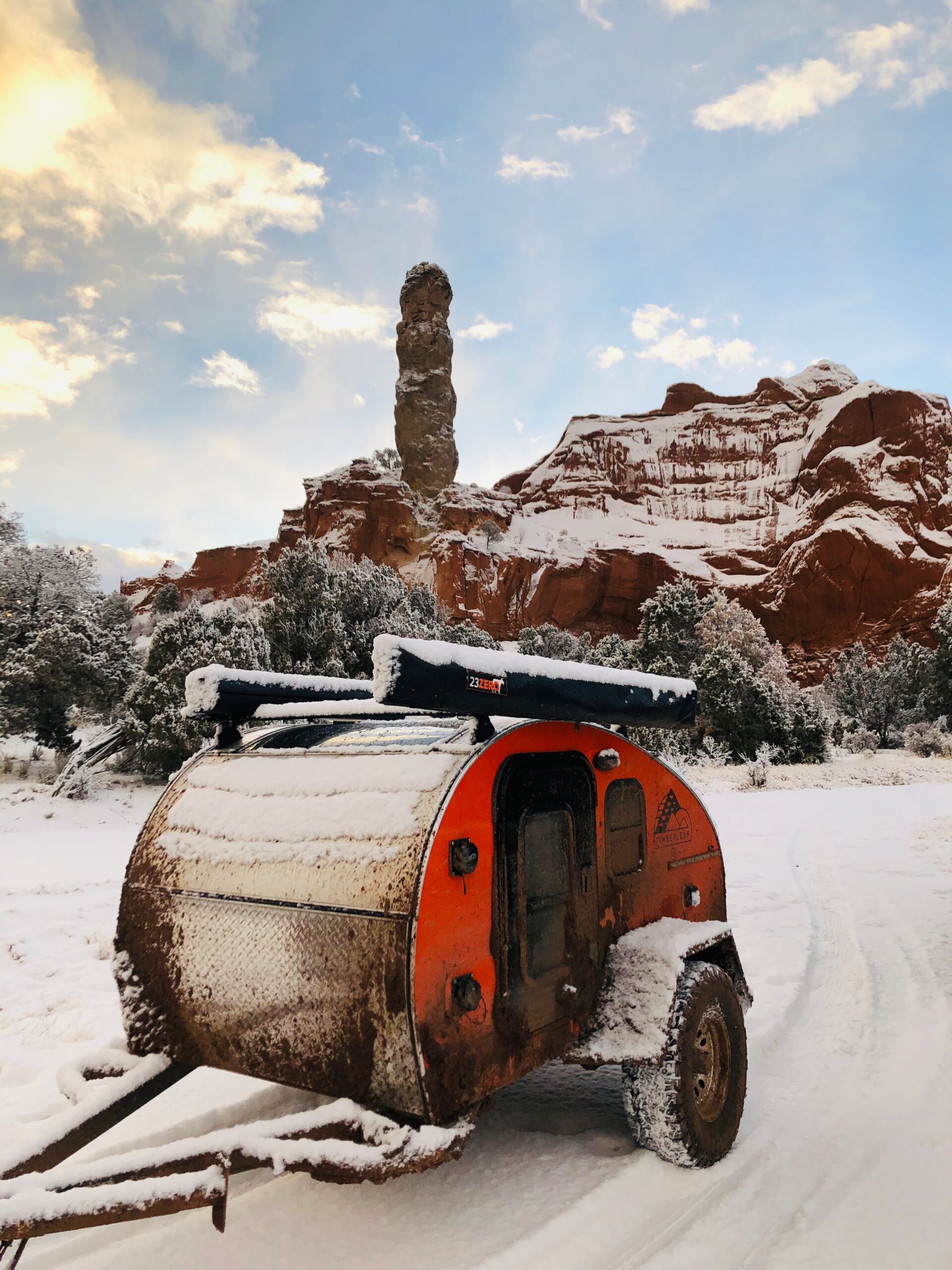
Image: Paul Buck